
Quick Summary
- Core Concept: The Customer-First Local SEO Framework
- Key Stat: The majority of new service business bookings in competitive areas originate directly from the Google Map Pack.
- Recommendation: Integrate an optimized Google Business Profile with an automated appointment system like LamaniHub to convert geographic searches into confirmed customers efficiently.
Executing local business SEO in Auckland correctly is the targeted process of ranking a business in the Google Maps ‘Local Pack’ to capture nearby high-intent customers. To secure these bookings effectively, service-based businesses must align digital footprints with consumer protection standards and protect data under the Personal Data Protection Act.
With rising operational costs and intense local competition in areas like Wellington and Auckland, relying solely on foot traffic or word-of-mouth referrals is no longer a viable growth strategy. Today’s modern customers use their smartphones to immediately find, review, and book the nearest available service provider—whether it’s a plumber, tuition centre, salon, or renovation contractor.
The frustration for many business owners lies in paying for generic digital marketing services that generate irrelevant clicks instead of actual paying customers. A misaligned approach often leads to an overworked front desk dealing with unqualified leads, high no-show rates, and potentially serious consequences from unsubstantiated advertising claims.
By implementing a customer-first visibility framework, business owners can systematically convert neighborhood searches into confirmed appointments. This structured approach leverages precise business citations, intelligent chat automation, and compliance-first marketing strategies to transform your digital visibility into a reliable stream of daily foot traffic.
1. Understanding the Fundamentals of Local Search Optimization
Local search optimization differs from general digital marketing by specifically targeting customers within a defined geographic radius. It prioritizes ranking your Google Business Profile in the Local Pack, ensuring immediate visibility when a nearby customer actively searches for urgent services.
Mastering regional visibility begins with understanding how search algorithms prioritize geographic proximity and user intent over broad website traffic metrics. Google’s Local Pack displays the top three nearby businesses above standard organic results, making it the most valuable digital real estate for local service marketing.
The distinction between organic blue links and Map Pack placements is critical; the latter drives immediate footfall. Building strong foundations through proven technical search fundamentals ensures your website communicates effectively with search engines, allowing specialized local SEO services to elevate your local prominence.
The Anatomy of a High-Converting Google Business Profile
A high-converting profile goes beyond a simple address listing. It requires accurate Name, Address, and Phone (NAP) details, verified primary and secondary service categories, and high-quality images of the business premises. These elements collectively dictate your business’s ranking potential based on proximity, prominence, and relevance.
“When advertising compliance fails on launch, the cost is 6-12 months of advertising downtime. The same applies to mismanaged local search profiles—poor data means lost customers.” — Marketing Compliance Lead, Lamanify
Why Mobile-First Indexing Matters for Urgent Service Searches
The vast majority of urgent service queries occur on mobile devices. A homeowner dealing with a burst pipe wants immediate answers, directions, and a fast-loading booking portal. Ensuring your business’s digital presence is built on an SEO-first website architecture directly supports this urgent mobile user intent.
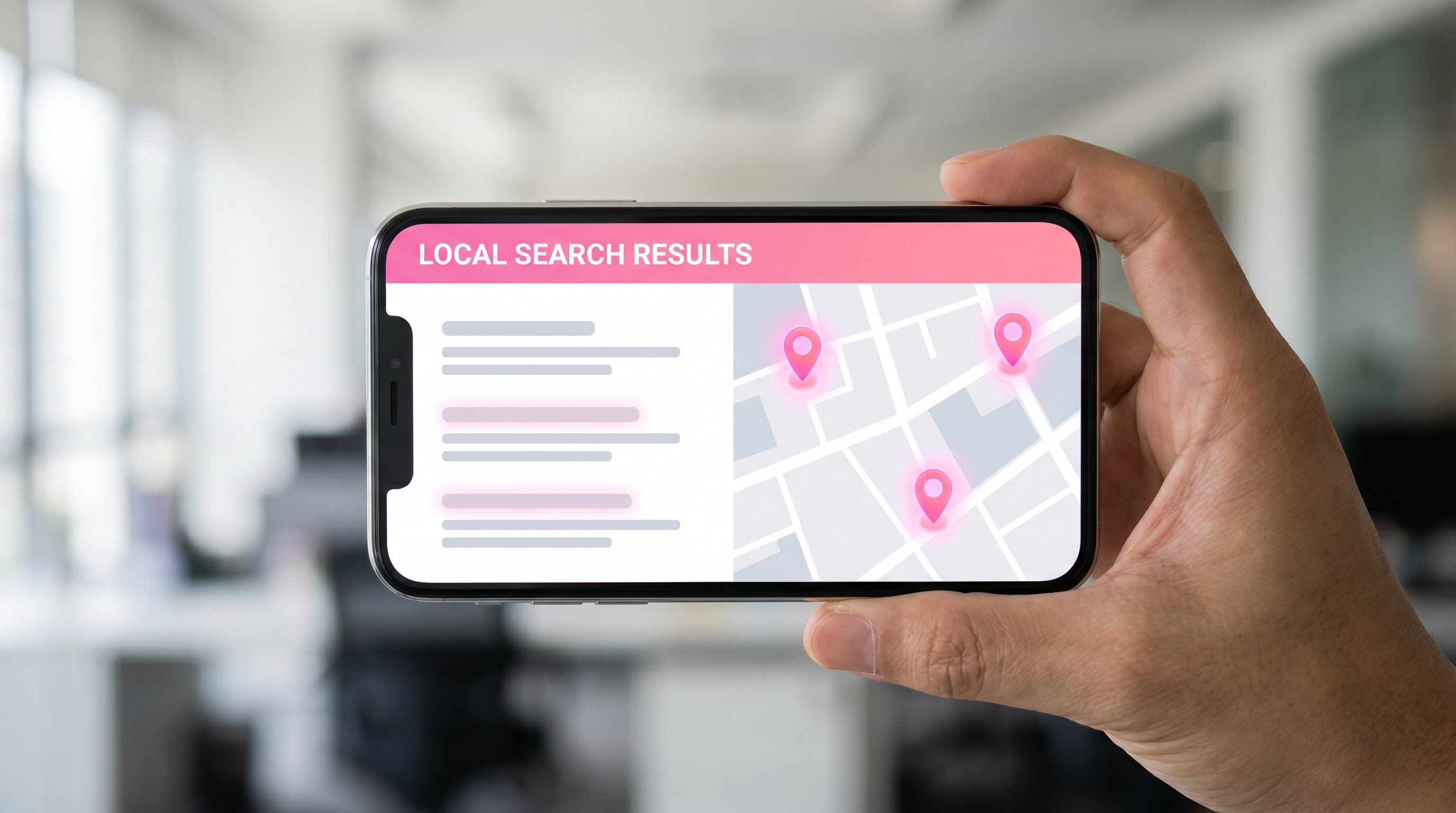
Dominating the local map pack drives immediate customer footfall.
2. Core Pillars of a Winning Local Search Strategy
A successful geographic search strategy relies on consistent citations across Auckland directories, an SEO-first website architecture, and authentic customer reviews. Maintaining accurate business information directly impacts your ability to rank prominently and establish trust with prospective customers locally.
Establishing local dominance requires consistent data across the digital ecosystem, empowering customers to find your exact location effortlessly. Optimizing your primary and secondary categories on your profile ensures you capture highly specific searches, such as “emergency plumber near me” or “best tuition centre in Hamilton.”
To accurately reflect your business’s physical presence, business owners must adhere to established guidelines for representing a business online. Accurate citations validate your operational status to search algorithms, preventing frustrating customer experiences caused by outdated operating hours or incorrect contact numbers.
Mastering Business Citations in Auckland
The role of local directory citations in validating your business’s physical presence cannot be overstated. Consistent NAP information across business directories, local portals, and social media pages builds algorithm trust. Any discrepancies in your business’s listed address or phone number can dilute your search visibility.
Generating and Responding to Authentic Customer Feedback
Managing customer reviews effectively boosts prominence and builds crucial local trust. Responding professionally to both positive and negative feedback demonstrates active customer care. While promoting positive experiences, any claims regarding service quality must be framed carefully and remain truthful and substantiated.
3. Navigating Advertising Standards and PDPA Compliance
Auckland consumer protection standards require all advertising claims to be accurate and substantiated to avoid regulatory penalties. Additionally, customer data collected through local lead generation must be handled securely in full accordance with the Personal Data Protection Act.
Digital marketing for service-based businesses in Auckland operates under regulatory frameworks designed to protect consumers and their privacy. Industry watchdogs and consumer tribunals actively monitor digital spaces, making compliance a mandatory operational pillar rather than an afterthought. Reviewing the relevant advertising standards and industry guidelines is a crucial first step for any business owner.
Focusing on reliable, people-first content helps bridge the gap between algorithmic visibility and regulatory safety. Generic marketing agencies often expose businesses to legal risks by inventing unsubstantiated claims to chase rankings, which directly violates consumer protection standards.
Avoiding the Unsubstantiated Claims Trap
Many businesses fall into the trap of using superlative language like “the best plumber in Auckland” or guaranteeing absolute results. Advertising standards mandate that claims must be substantiated and factually accurate. Providing objective educational value, rather than unsubstantiated promotional hype, ensures long-term marketing safety.
Securing Customer Data During Online Bookings
Ensuring your lead generation tools are PDPA-compliant protects both the customer and the business. Maintaining customer confidentiality requires secure digital infrastructure, meaning all web forms, chat transcripts, and booking requests must process personal identifiers through encrypted, compliant channels.

Balancing marketing growth with strict regulatory compliance.
4. Converting Local Traffic: Overcoming Front Desk Overload
Capturing high-intent local search traffic requires a seamless transition from discovery to booking. Implementing intelligent appointment systems drastically reduces front desk bottlenecks, ensuring that every local search query translates into a confirmed booking without violating customer confidentiality standards.
High search rankings are meaningless if your business cannot efficiently convert digital inquiries into managed, confirmed appointments. The hidden cost of missed calls and after-hours inquiries often represents thousands of Ringgit in lost monthly revenue.
By deploying automated tools like the LamaniChat AI receptionist, businesses can handle 24/7 inquiries instantly. This eliminates administrative friction, allowing the front desk to focus exclusively on the in-person customer experience while the software handles digital triage.
Capturing After-Hours Customer Intent
Urgent service needs do not adhere to business hours. Customers frequently search for nearby service providers late at night. Integrating robust WhatsApp automation enables businesses to capture these leads instantly, offering immediate digital responses that secure the customer’s intent to visit the following morning.
Streamlining the Customer Experience with Automation
Automating the booking process ensures administrative efficiency. Intelligent digital reminders significantly reduce customer no-show rates. When the LamaniHub appointment system handles confirmations and rescheduling, operational stress diminishes, creating a calmer, more professional environment for both staff and customers.
“A business that ranks number one on Google but fails to answer the phone is just funding its competitors. Automated booking is the bridge between local visibility and actual revenue.” — Business Growth Consultant, Lamanify
5. Measuring Return on Investment for Auckland Businesses
Evaluating the financial return on your geographic search marketing involves comparing agency retainers against specialized software value. Focusing on the lifetime value of a locally acquired customer provides the clearest metric for measuring sustained business growth and profitability.
To justify marketing expenditure, business owners must shift focus from vanity metrics to tangible revenue generated by confirmed customer visits. Tracking the exact source of confirmed appointments accurately reveals which digital strategies are genuinely working and which are simply draining the budget.
Targeted software solutions consistently outperform generic agency retainers because they integrate customer acquisition directly with operational management. Understanding the ratio of marketing spend to customer lifetime value empowers business directors to make data-driven expansion decisions.
Calculating Customer Acquisition Cost (CAC)
Understanding your Customer Acquisition Cost involves measuring the total marketing investment against the number of new, paying customers. For service-based businesses, lowering CAC while maintaining high-quality customer service is the primary goal of an integrated local search strategy.
Long-term Value vs. Short-term Traffic Gains
Short-term traffic spikes do not sustain a service business. Long-term value is built through recurring engagements, family referrals, and comprehensive service packages. A localized digital presence ensures you attract customers within your immediate community who are more likely to return for years.
| Marketing Approach | Lead Quality | Compliance Focus | Booking Integration |
|---|---|---|---|
| Generic Digital Retainers | Broad, often geographically irrelevant | Low (Risk of unsubstantiated claims) | Manual (Relies on phone calls) |
| Integrated SaaS Platform | High-intent, local radius targeted | Strict advertising standards & PDPA adherence | Automated 24/7 scheduling |
- Claim and verify your business’s Google Business Profile with accurate location data.
- Ensure all service pages on your website load quickly and are mobile-responsive.
- Audit existing website copy to ensure no unsubstantiated claims violate advertising guidelines.
- Implement a PDPA-compliant digital appointment system to capture after-hours bookings.
- Establish a standardized internal process for requesting and responding to customer reviews.
Conclusion
Mastering local search visibility is no longer optional for Auckland service-based businesses aiming for sustainable growth. Implementing comprehensive local business SEO strategies ensures that your business stands out exactly when nearby customers need immediate services.
By prioritizing regulatory compliance and integrating automated booking infrastructure, businesses can capture local demand efficiently. Aligning your digital presence with strict advertising standards protects your reputation while maximizing the return on your marketing investment.
Partner with Lamanify to build a resilient, customer-first digital ecosystem that fills your schedule reliably without overburdening your administrative staff.
Frequently Asked Questions
Why is local search visibility crucial for Auckland service-based businesses?
Local search visibility ensures your business appears in the Google Local Pack when nearby customers search for immediate services, driving high-intent foot traffic.
How do advertising regulations affect my local business's online marketing?
Auckland consumer protection laws require that all advertising claims must be accurate and substantiated, ensuring transparency and building customer trust.
Can I automate my customer appointment bookings securely?
Yes, using secure systems like LamaniHub ensures you capture leads 24/7 while processing customer data in accordance with the Personal Data Protection Act.
What is the difference between general SEO and local SEO for service businesses?
General SEO focuses on broad keyword rankings, whereas local SEO optimizes your Google Business Profile to capture customers within a specific geographic radius.
How much does SEO cost for a local service business in Auckland?
Costs vary between generic agency retainers and specialized SaaS platforms, but true ROI is measured by the lifetime value of locally acquired customers.

Founder & Creative Director
Azri Omar
Azri is a seasoned digital marketer with over 10 years of experience in brand development and marketing strategies. Graduated with a Master's in Engineering (MEng.) from Sheffield, UK, Azri began his digital marketing journey during his studies, honing his skills in design, copywriting, and crafting impactful digital experiences. Today, he helps clients build professional and highly visible online presences, ensuring their brands thrive in a competitive digital landscape.